When we strip ourselves of emotion, thought, technology, language, culture; everything that separates us from even our most intelligent primate cousins, we are left with a shared primitive intuition; the survival instinct. Ultimately, everyone must fight for survival in different ways, and seek social status due to the social Darwinism inherent in society. It’s a dog-eat-dog world. However, unlike dogs, we do not fight for our survival and establish dominance through violence, but rather look to those around us and seek to cooperate through mutually beneficial arrangements. This is what separates us from animals, our ability to cooperate on large and complex scales, and to create systems wherein the fight to cxa survive is made easier for all of us. However, when this complex interdependent hierarchy is threatened by something like a viral disease, this system is at risk of breaking down and threatening our more base and primal natures, unleashing our selfish interest to survive.
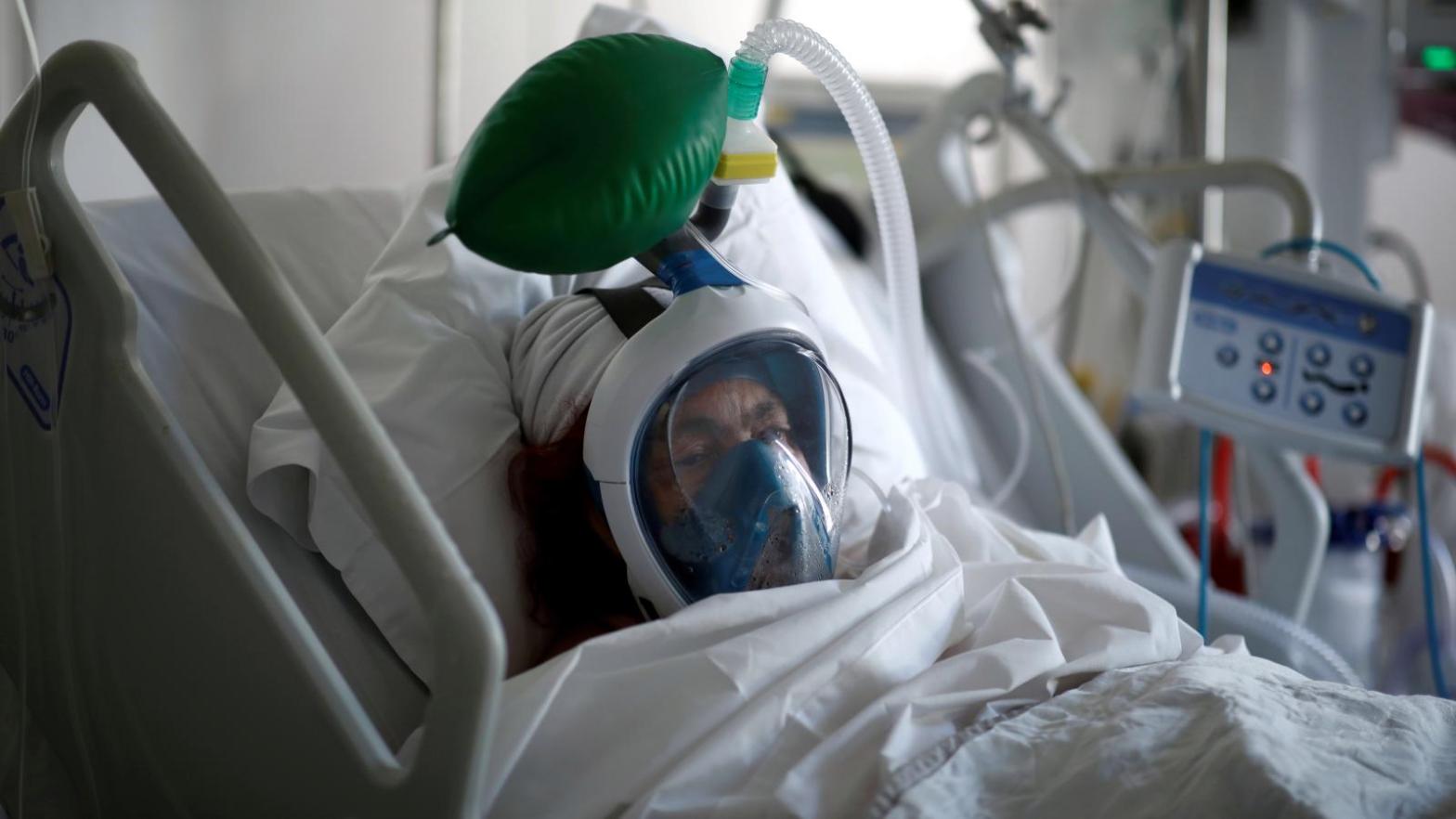
The reason why we are at such risk is because our complex social systems were not prepared for a shock like a viral pandemic, and most notably, our healthcare systems have especially been hit the hardest. There is a massive healthcare crisis internationally across the US, India, Brazil and formerly Italy. Hospitals are dealing with the most basic of problems; the scarcity of ventilators. Having little of these scarce resources to treat thousands of patients, this problem brings along with it several economic and ethical dilemmas.
Ventilators are essential to combat COVID-19 as they aid patients to breathe, and since coronaviruses like COVID-19 are in fact always respiratory illnesses, this is key. Hospitals only have a limited supply of such machines, and with excessive demand for life saving technology, it is left in the hands of doctors to determine who lives and who dies. In the US for example, there are only approximately 160,000-172,000 ventilators available for use across the country, however, the Society of Critical Care Medicine estimates that roughly 960,000 ventilators will be required for use as COVID-19 cases climb. Companies like General Motors in the US and Bharat Electronics in India are working on overdrive to meet this growing demand for ventilators, yet the raw numbers of ventilators isn’t quite the only problem at hand.
Taking the example of food shortages, an Elementa research article by author, M. Berners-Lee, estimates that we roughly produce enough food to feed 1.5x the world’s population (10 billion people). Therefore, clearly the problem isn’t with production, it’s with distribution, as many people still go hungry, they just don’t get the food that is already technically available. This also happens to be the case for the ventilator shortages; as factories are churning out machines, the question obviously arises, who gets these machines first? As a simple answer, it could be said that factories could create ventilators at a faster rate than the increase in COVID-19 patients if necessary; however, time is of the essence right now.
Several governments across the world have taken the approach that ventilators be allocated based on “who had the best chance of survival”. An Italian medical college recommended that “informed by the principle of maximizing benefits for the largest number. The allocation criteria need to guarantee that those patients with the highest chance of therapeutic success will retain access to intensive care.” By default, institutions would resort to allocating resources through simple utility calculus, to maximize the number of lives saved or maximize the number of life years saved. Such allocation is unjust however counterintuitive it may seem.
According to Dr Diego Silva from the University of Sydney, those in best positions to avoid infection with COVID-19 are statistically the young and healthy, and while “wealth equals health (at a population level), the opposite can be quite true.” Therefore, if we are to save the most number of lives possible, rather than saving the lives of those most likely to symptomatically improve then we are disadvantaging and condemning the economically poor and socially marginalized. For instance, those with severe mental illnesses like schizophrenia are more likely to smoke a greater quantity of cigarettes than those without such mental illnesses, and since this is a significant comorbidity to COVID-19 with studies suggesting that smokers are at a higher risk of adverse outcomes, it makes a large impact on different groups of people to varying degrees. With this simple utility calculus, someone with such comorbidities are less likely to receive a ventilator than one without because they are deemed inefficient to be treated.
It isn’t enough to decree that we maximize our resources without even acknowledging the broader social contexts wherein these decisions take place. In J.S. Mill’s, Political Thought: A Bicentennial Reassessment, he says, “Scholars who take seriously the principle of utility believe that the maximization of good ought only to occur when all people are treated as equal and impartial. Impartiality and equality of people have long been a part of the foundation of the study of utility, especially when the principle of utility is applied in answering questions that concern the public.” Though this is often ignored or forgotten in its application in the context of health care. What this means is that the maximization of goods such as ventilators should not be thought of outside of the parameters of equality, precisely because ventilators during a pandemic are public goods.
Ventilators should be allocated through a lottery system during a pandemic. As odd or wrong this may sound; all else being equal, we must maximize the number of lives saved. However, here’s the catch: society before COVID-19 was certainly not equal, and certainly isn’t right now. It would seem quite disingenuous to pretend that all people are materially equal and have the same chances to receive ventilators. That such decisions will be made based purely off of clinical probabilities. A lottery system would remove the idea of preferential treatment, and we would still be maximizing utility.
Critically, it would further promote equity and justice, and more importantly, not further increase inequalities. Through the lottery model, those with comorbidities will no longer be further disadvantaged by the allocation criteria. Doctors cannot rectify existing injustices; however, they can likely exacerbate them by maximizing the number of lives saved, rather than a system of randomness would likely be preferred with the concern of efficiency in allocating ventilators.
 The Candid Contrarian