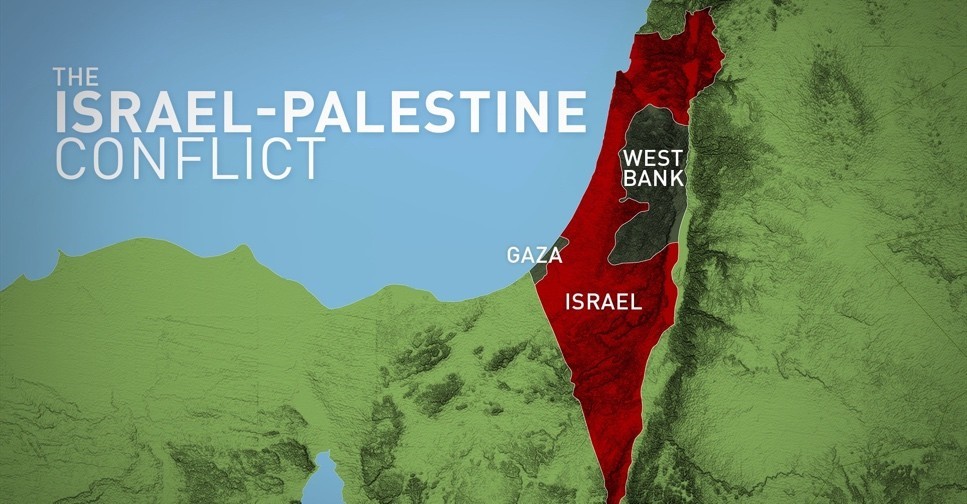
Last week on Thursday, August 13th, a historic accord was signed between Israel and the United Arab Emirates, mediated by the United States. As a result of the accord negotiated by the Trump Administration, the UAE became the third Arab nation after Egypt in 1979 and Jordan in 1994 to fully normalise relations with Israel, in exchange for Israel suspending it’s plans to annex parts of the West Bank. However, the main story here is not about Israel conceding it’s claims over the West Bank to bring peace to the region. It’s about Iran.
Here’s the dirty little secret about this deal: the UAE is not concerned with Palestine. Israel’s promise to suspend annexation is a fig leaf for the UAE to claim a diplomatic victory, as Israel will continue to occupy the West Bank without any change in the legal status of their occupation. The primary threat to Sunni nations in the Middle East is not Israel and vice versa, it’s the Iranian axis; as Iran continues to stockpile missiles and build up its nuclear program, support Shiite groups in Iraq, Hezbollah in Lebanon, the Syrian dictatorship, and Houthi rebels in Yemen, Saudi Arabia, Oman and Bahrain are not far behind from the UAE in formalising their relationship with Israel, recognising the realities of today’s geopolitical situation in the region.
The Israel-UAE peace agreement is part of a larger realignment occurring in the Arab world to create a new balance of power centered around an alliance to oppose the Iran-led coalition backed by Iraq, the Assad regime, Hezbollah and Russia.
Political pragmatism and realism have trumped the ideological pretense that the Islamic world cannot tolerate a Jewish state and must restore Palestine. The growing divide in today’s Middle East is not surrounding the Israeli-Palestinian conflict, it’s surrounding the Iranian-Saudi Arabian proxy war being fought across the region, and this peace deal was just a recognition of this fact.
Realpolitik vs. Political Idealism
Realpolitik from the German Real or “practical” and Politik for “politics” is politics or diplomacy based on considerations of given circumstances and factors, rather than ideological notions or moral and ethical premises. Often also called realism or pragmatism due to its philosophical approach it’s often used pejoratively to imply politics that are perceived as coercive, amoral, or Machiavellian.
In political theory, and the study of international relations, oftentimes this kind of realism (prioritising national interest) and idealism are put at odds with one another in determining the ways in which countries conduct their foreign policy. This tension has been growing in the Middle East for a long time as well, where on ideological grounds the strategic consensus does not make sense.
Both Saudi Arabia which promotes radical Islamic terror and Wahhabism as well as Israel are backed by the United States. Why? Both serve as stopgaps against different threats in different ways. Saudi Arabia is the West’s bulwark against more adverse political opponents, notably Russia backed Iran, while Israel is a more natural ally that also has common strategic interests in opposing Iran (which is an existential threat to the country) as well as containing terrorist elements in the region.
Reagan Doctrine
So how should this tension between the idealism for acting morally and the necessities of politics be evaluated by an impartial observer, given these recent developments of Israel normalising relations with the UAE, in a clear realignment in the balance of power in the Middle East? It is true that ends do not justify means, but also true that strategic alliances with morally ambiguous partners is sometimes necessary to safeguard one’s interests.
The Reagan Doctrine is perhaps one among the best frameworks for this even in a post Cold War context, and to a large extent is still used in America especially in the maneuvers of the Trump Administration.
It essentially poses two questions:
- Is the requisite action aligned with a nation’s moral principles?
- Is the requisite action aligned with a nation’s self-interest?
No country including America where this doctrine originates, can take it upon themself to right wrongs and be the world’s police. If one nation violated another’s sovereignty everytime it felt the other had violated one of its own moral precepts, there would be no international order. Thus, it is important to always ask whether a foreign action is in the utmost interest of one’s state, through the classic Realpolitik framework, as well as weigh this down against the moral consequences of these actions in an idealistic manner.
In the case of the Middle East, it is clear that the brewing conflict between the slowly solidifying factions are inevitable if not already underway in the Syrian and Yemeni civil war as examples, if not elsewhere. But it is also clear that if this conflict is inevitable, these recent developments are for the good, as opposition to the Iranian regime is not just necessary for preserving peace in the region but more morally justifiable than siding with other authoritarian regimes.
 The Candid Contrarian