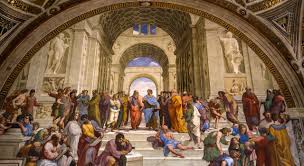
What is right and wrong? Is anything real? Is there such a thing as objective knowledge? These are some of the questions that may come to mind when we think “philosophy”, and to the average Joe, thinking in this way may seem unnecessarily convoluted. But philosophy is meant to change how we think and challenge our assumptions. It trains us to look at the world in a completely different, distinct manner, and this can go a long way. So whether you like it or not, the following books on philosophy will change the way you think forever.
The Republic – Plato
The Republic is thought to be the first, concrete text written in the field of philosophy. The book draws a comparison between the reader’s soul and the city. In his book, Plato effectively asks two questions, “What is justice?” and “Why should one pursue being just?”
Plato provides various arguments for why the existing thoughts and ideas on justice are flawed and contain logical fallacies. The book doesn’t give concrete definitive answers for the questions, but rather focuses on using the city-soul analogy in letting readers draw their own conclusions. For anyone interested in learning the basics of philosophy and learning regarding how one of the most influential philosophers of all time differentiated between right and wrong, this book is one that will surely achieve those objectives.
““I am the wisest man alive, for I know one thing, and that is that I know nothing.”
The Fountainhead – Ayn Rand
Unlike The Republic, Ayn Rand’s book The Rainmaker, is a much more recent, and contemporary book. The book stands out due to it revolving around a thought provoking narrative that revolves around an aspiring architect and his struggles along the way. In her own words, “The Fountainhead celebrates the heroism of the men who took first steps down new roads armed with nothing but their own vision.” What differentiates this book from a lot of other books that are generally focused on philosophy and what it is, The Fountainhead focused mainly on a single idea and expanded on it throughout. For anyone who wants a read that isn’t extremely heavy, but still teaches them valuable lessons on different philosophical thoughts such as objectivism and the importance of individualism over collectivism, this would be a great place to start!
“The hardest thing to explain is the glaringly evident which everybody has decided not to see.”
Beyond Good and Evil – Friedrich Nietzsche
Unlike other books in this list, Beyond Good and Evil is a book that’s made up predominantly of various different statements/aphorism. These aphorisms generally revolve around Nietzsche’s ideas and thoughts regarding how one ought to approach philosophy. The book is predominantly set in his view of the intrinsic value humans possess and whether free will exists or not. Like the name suggests, his work goes beyond the cliche question of “what’s right and what isn’t?” Nietzsche explores the value of life and its meaning, something which I found extremely thought-provoking.
A History of Western Philosophy – Bertrand Russell
To many beginners/newbies, this book ought to be considered the holy grail of immersing oneself in philosophy. One of my personal favorites, it begins with an imperative introduction to what philosophy is and isn’t (rather than delving right into heavy subject matter). It talks about the impact of philosophy Plato, Aristotle, and Socrates had from Ancient Greece up until the world in 1945 (when the book was written). While it isn’t complete in detailing a lot of philosophical concepts, it meets the criterion for being a great beginner book, one that I enjoyed the most!
While it may seem like a daunting task to learn more about philosophy and different ideologies in it, doing so can be extremely rewarding. It doesn’t just teach one person to think or question what is and what isn’t, but rather approach life in a different way. At the end of the day, every decision we make can be studied and philosophically analyzed, learning about this would go a long way in making each of us better decision makers and students of life in general.
 The Candid Contrarian