The next step in this process is the work itself, how should you work to be most productive?
The answer to that will differ from person to person, and oftentimes none of the existing methods or theories work for someone. But each of them have something to offer, and hopefully by discussing a few methods, you may be able to find one that works for you.
Flow
Recently, the psychological state of “flow”, has been receiving a lot of attention. Flow describes the state of mind when someone is completely immersed in their work. This is seen extremely frequently in athletes and artists, but is definitely not limited to them. The state of being completely absorbed by the moment, when the rest of the world doesn’t matter, when hours go by in what seems like minute, that is flow. When nothing can distract you, when you are in this state you tend to be extremely creative, focussed, productive, and genuinely happy.
Personally, I feel like this is the most ideal state in which to work, because the work doesn’t really feel like work at all. But how do you get into this state when the work is tedious, boring, and something you really don’t want to do?
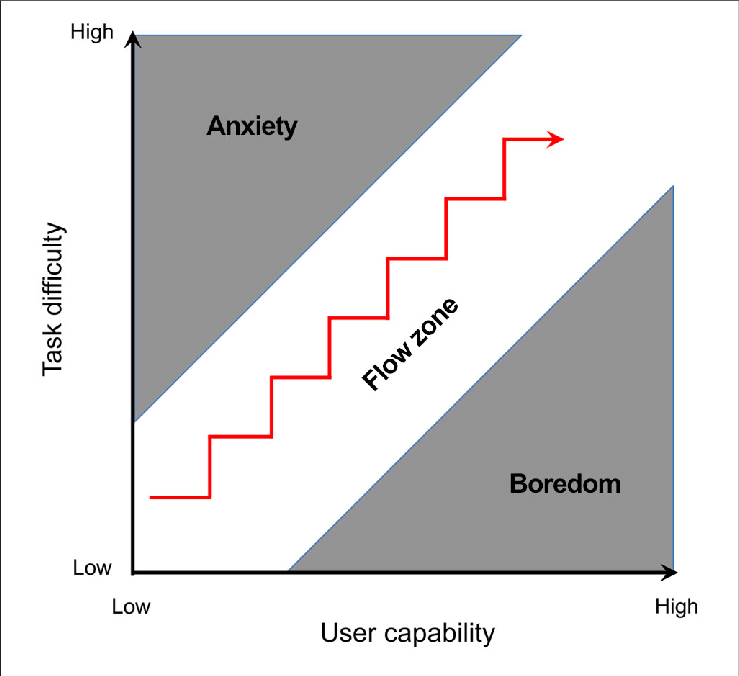
The image above describes one of the key psychological triggers of flow. Ability vs difficulty, and while it may be subjective it is most important to plan the work in such a way it reduces both anxiety and boredom. The other psychological triggers are concentration, clarity, and feedback. Intense concentration and undivided attention is extremely important when getting into flow, it allows the feeling of there being nothing else around you and ensures complete commitment to the moment. There needs to be clarity in the goal, for you to be in the moment, there shouldn’t be any worry about the next step, this is why it requires a great organization and planning. And lastly, instantaneous feedback is necessary, there needs to be someway to measure progress and how on track the work is going. This allows it to be unimpeded and streamlined with the overarching goal.
The next set of triggers are related to the environment, it includes consequences, richness, and embodiment. In athletes, high physical risk is a major factor in what makes them give their complete undivided attention to something. This doesn’t mean you have to start working while sitting on the edge of a cliff, but rather something in which you have to fully commit. With artwork, it could be making a mistake. Essentially things in which you can’t switch to autopilot, wherein every detail matters, every word, every punctuation, and that will lead to a flow state. A rich and stimulating environment has been shown to improve cognitive functioning, anything new, complex, or dynamic. For me, this translates to listening to music, but it could even be working outside or in a coffee shop. Lastly, it is said that there needs to complete physical awareness . This results in the feeling of being completely in the moment and in control.
Additionally, there are even some physical approaches in terms of achieving flow, the most common being meditation. This approach takes to flow in a very literal sense, something on the lines of, “let the body flow and the mind will follow”. This involves being aware of your breathing and getting out of your own head essentially. This meditative state can help with positive visualisation, wherein you imagine the best version of yourself, casting all impeding self-doubt aside. Flow is very similar to stoic practices as well, making it an effective method to finish things.
The Pomodoro Technique
Unlike flow, this technique is much more rigid and targeted towards time-management. The name is based on an Italian tomato, while it seems a bit silly, this technique has been used by many to work, and has done so successfully. It seems to be suited best for open-ended work, with no guaranteed time limit. This means projects, studying and revising, essays, etc. It allows for optimum efficiency while ensuring that there are enough breaks to prevent stress and fatigue. It is also said to help out and prevent people from getting distracted or completely derailed by small things.
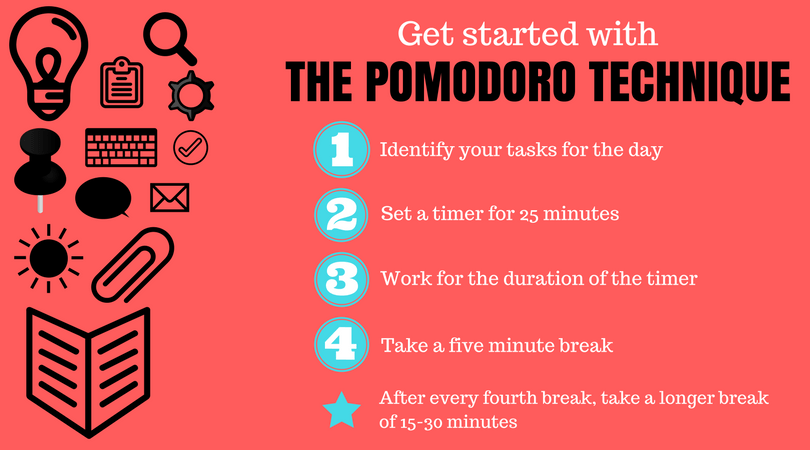
The image above tells you all you need to know about how to do it, however there are 3 key things to note. Like flow, to make it easier and more clear, there needs to be a breakdown of big tasks into small and doable chunks. The second key is that combining small tasks into one worksprint works really well. Lastly, each ‘pomodoro’ requires complete attention and dedication, once the timer starts it shouldn’t be paused to check email or anything else. This makes it extremely efficient in that it prevents distracting tangents or rabbit-holes.
Essentially, this technique could be used to break up extremely tedious. It serves as a counterpart to flow, for example, flow is much easier to achieve when doing something you are passionate about, but what about boring and tedious work? Work that you don’t want to do? The pomodoro serves as that alternative, with enough breaks for it to not be mind-numbing, but efficient enough to actually get good work done.
What Can you Do?
There are hundreds of techniques, some with funny names and many with no name at all. But there are a few similarities which are important to keep in mind.
- Typically, it is recommended the thing that you don’t want to work on the most, is the thing you should do first. This ensures that the rest of the work you do is more enjoyable, and your day only gets better.
- Breaking work down and setting goals is the most important part of having an organized and effective workflow.
- Reflect, reflect, reflect. A common stoic practice is to ask why you procrastinated something. The answer tends to be an excuse, and a bad one at that. This almost guilts you into not doing it again. Reflections don’t need to be extensive and written down, do whatever works, but it is important to get to the bottom of things. What works? What doesn’t? Why not? Simple things, but very effective.
- Measure your results and keep track of things. Sometimes its important to say, “I’ve finished what I set out to do,” and that truly helps with self-confidence and motivation. And if you’ve never been able to say that, it doesn’t have to mean that you’re not productive, maybe you just take on too much for a day.
- Create routines and automate things. The fewer things you have to worry about, the more energy you can dedicate to the important things. Learn a bit of coding or excel to automate finances or other simple and tedious tasks. An day spent on a code can translate to heaps of time being saved in the long run.
- Stop multitasking. We’re not suited to doing many things at the same time, instead organize and prioritize work such that you can completely dedicate yourself to one task and then move on to the next.
This can be really overwhelming at first, but like most things, you don’t have to do it all at once. Get comfortable with one thing, and then add something new. It may seem like a lot of unnecessary effort, but it is priceless in the long-run.
 The Candid Contrarian