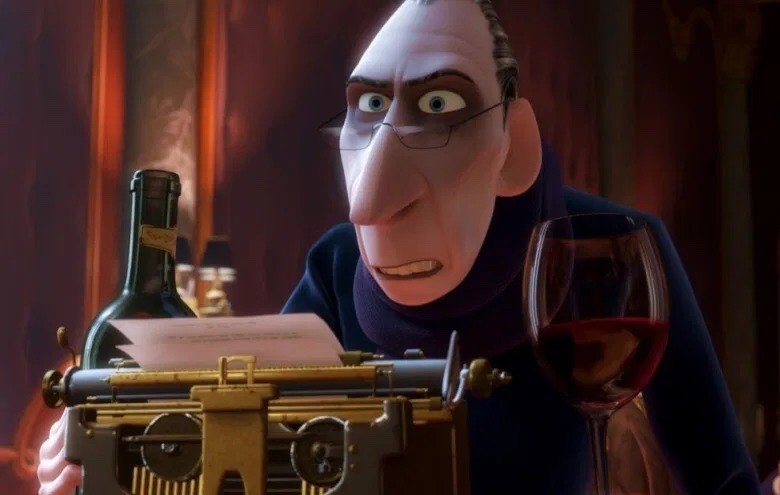
While answering the reading section of the ACT exam a few weeks ago, I found myself unusually interested in one of the passages. Yes, I am the sort of person who actually enjoys that bit and likes learning about the things they include. Crazy, I know. And this time was no different—while everyone around me was feverishly tapping away at their screens, I was entranced by the debate discussed in one of the texts: whether critics truly play an important role in the media and arts culture we have around us today. Clearly this made much more of an impression on me than I knew at the time; while considering what I wanted to write about this week, my brain immediately threw the word “critics” at me. My research turned up a host of conflicting opinions—one article would cite the importance of having professional critics for film, tv, and art, while another would question what it truly meant to even be a professional critic. As I went deeper and deeper into my reading, I found myself constantly wondering: do we still need critics in this age of opinion?
Any creative system around us has three kinds of people: creators, critics and consumers. Out of these three, critics are the ones to get the most bad press. Creators are responsible for producing works, while consumers view those very works, but critics are in the awkward space in-between. They are not quite creators and not quite consumers, but instead are a mixture of both—they create work but it isn’t a work of art and it isn’t consumer feedback either. This work is crucial to the healthiness of any creative medium—yet, the work of a critic is severely underappreciated.
First though, let’s clarify what exactly does it mean to be a critic?
The word “criticism” is quick to inspire negative emotions—it sounds like chastisement you would get from an angry teacher or parent. If someone is your critic, then they are likely to be an enemy to you. Being critical of something is to be hard to please or hostile—a hater, essentially. And when it comes to the world of art, a critic is perceived as someone whose only job is to tell you why you’re wrong to love the movies and books that you do. Undeniably, there is a sliver of truth to this perception of criticism. One of its primary purposes is to separate the good from the bad, which requires critics to make judgements about the art they are perceiving. However, the roots of criticism are meant to lie in receptivity and response, not in judgement. Upon encountering a work of art, everyone has some form of response. And in that sense, we all are critics. What makes someone a critic is questioning themselves—asking why they feel the way they do. One must have the ability to articulate and formalize this into words. To be able to say what you feel and why: that is the basic purpose of a critic. And thus, it is in pursuit of this self-expression that a critic has to make judgements and comparisons. Rather than viewing these judgements as a sign of hate towards our favorite movies or books, it is important to start looking at this as the beginning to a discussion. But while this sounds neat in theory, how does this implement itself in reality?
Not very well, it seems. Actors are some of the first to take up arms against critics. The cast of the poorly reviewed movie, Ocean’s 8, commented that the gender balance of film reviewing was “unfair” and said that,“The conversation has to change.” Other actors and movie crews have gone on to put out entire marketing campaigns that have hinged on undermining critics after their movies have received poor reviews. And closely following actors are the audiences. There have been a number of notable discrepancies between critical consensus and public opinion—some of the highest grossing films at the box office have also been the most hated by critics. Some of the most famous film franchises of all time such as Shrek, Transformers, Ice Age and Twilight have received terrible reviews from critics but have gone on to smash all box office records. Movies from the famous Pirates of the Caribbean franchise have consistently received under 50% from critics but have cashed in millions from viewers. This begs the question—is there truly such a disconnect between audiences and critics? And do reviewers have a responsibility to the actors and audiences of the content they critique?
The simple answer to that question is no. As a critic, one of the most fundamental principles is the dedication to the medium, not the audience. One is not meant to reflect the opinions of the public, but rather voice their own. Many times, these will align and that is a positive thing as consumers seek validation and love knowing that there are professional critics with whom their perspectives align. But there will also be a myriad of situations in which they don’t, and critics are not obliged to follow the general consumer consensus. Unfortunately, in today’s world, that amounts to being humiliated and trolled on the internet. Reviewing a film through a political or feminist lens will have thousands of people rising with indignation. Engaging in a deeper intellectual discussion on a piece of literature will invite the masses to call you an “intellectual” or an “academic” as though it were a slur— “You’re a critic, what do you know about fun, light content?” Voicing an opinion out there is hard these days, but that’s more the reason to stop holding back, because there is nothing more harmful to healthy critical discourse than changing one’s own opinion to fit a larger majority.
Ultimately, this leads to the final question: given that the appeal of art is entirely subjective, why do we need professional critics after all? The answer lies in the question itself—we need critics precisely because all art is subjective. Professional critics with training and a deep reservoir of knowledge regarding film, story and literature can help us highlight aspects of a movie or text that we might have missed to help us understand it better. I’ve experienced this several times—I loved the movie Get Out which was an original horror and thriller film. It had extremely pertinent themes regarding race, liberalism and PC culture in America and this just further inspired me to read what critics had to say about it. Had I not done that, I would have been blind to the deeper aspects of social commentary the movie broached, which then allowed me to clarify my thoughts and understand what that work of art was attempting to say.
Thus, a truly valuable critic is someone whose judgement you can rely on and learn more from—which is not to say that it is someone you will always agree with. Instead, it is someone who teaches you to think about something and examine your own feelings about it. Critics allow us to give words to something that is primarily just an emotion. They make us think, question, and feel. And at the end of the day, isn’t that what we all ultimately aspire to achieve through our art?
 The Candid Contrarian