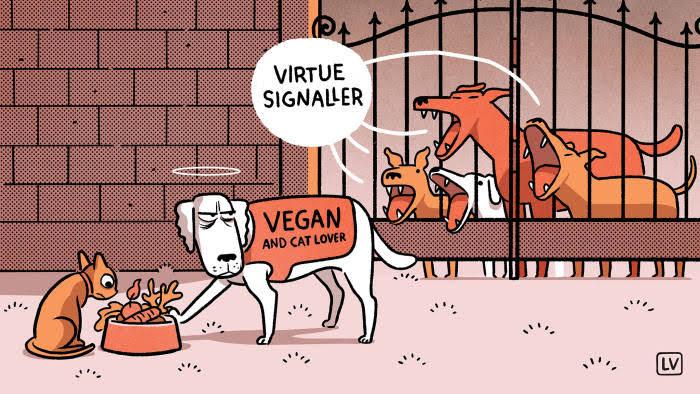
Amidst the deluge of posts raising awareness for one issue or another, I came across a term I had never heard of before—virtue signalling. It seemed extremely prevalent when looked at through the lens of the armchair activism that is all the rage these days, and I was curious to learn more. As I continued reading about it, I started wondering: am I guilty of virtue signalling too? And what about those around me?
But first, one must define it. A pejorative term, virtue signalling is defined as a conspicuous and disingenuous expression of moral values with the intent to enhance one’s own image. With expressions of moral outrage playing a prominent role in debates about issues like sexual assault, immigration, and police brutality, there have been criticisms of these expressions of outrage as being merely “virtue signalling”— essentially, feigned righteousness intended to make the individual appear superior by condemning others. Frequent offenders of this are politicians on the campaign trail. Another prime example can also be seen at the height of the #BLM protests when companies such as McDonalds, Nike, and Starbucks were accused of “corporate virtue signalling” or “woke washing,” for issuing their empty statements of support and branding. In fact, now even something as simple as wearing a mask can be branded as virtue signalling—while to the left it signifies a serious approach to public health, the right brands it as an over-reaction amid political wars.
In a politically and socially fraught climate with social media at its helm, the usage of this term continues to grow, as do the polarizing opinions regarding it. For the first side, virtue signalling is used like any another right-wing slur such as bleeding hearts, snowflakes, and social justice warriors. It is much like accusing someone of political correctness. This side believes that by sermonising and constantly expressing moral outrage against issues such as racism, sexual harrassment, climate change, etc. people believe themselves to be sanctiminous with a holier-than-thou attitude. Being accused of virtue signalling is to essentially accuse one of a kind of hypocrisy—they’re not really concerned with changing minds, let alone with changing the world, but with displaying themselves in the best light possible. James Bartholomew, who re-popularized the term in 2015 claimed that virtue signalling is driven by ‘vanity and self-aggrandisement’, not concern with others.
Ironically enough however, accusing others of virtue signalling might itself constitute virtue signalling – just to a different audience. By calling out virtue signalling, the speaker publicly claims the moral high ground themselves. The opposite side believes that while it is meant to be a slur to imply one’s moral grandstanding, the term might not be all that bad. They classify virtue signalling as an ad hominen attack—a charge that dismisses an argument based on the character of the presenter and not the argument itself. This side questions whether it truly matters whether an individual or a company are virtue signalling if it its for a good cause—they argue that it furthers moral discourse. An ideal example of this would be celebrity philanthropy. While “celebrity diplomacy is attacked from the right as part of a liberal-socialist Hollywood agenda,” [Andrew Cooper, Centre for International Governance Innovation] it can be said without a doubt that positive change and effects have been noticed from celebrities such as Angelina Jolie to Bill Gates.
What cannot be ignored however, is that regardless of whether virtue signalling is morally right or not, it does help raise awareness in situations such as posting helpful information and links on social media. It is worth noting however, that before doing something along these lines, one questions why they are doing it—is it merely to impress someone or is it interest in the cause itself? Furthermore, merely stopping at one post is not enough—to truly make a difference in the matters you speak about online, it is important to find more impactful, long-lasting ways to help.
Ultimately, intention and action are everything—while an individual may be motivated by the desire to signal their virtue, that does not necessarily mean they are faking their outrage. While many do indeed do that, the important thing to note is that the presence of strategic motives does not itself make a moral reaction inauthentic in its entirety. Thus, on the whole, virtue signalling has its place in moral discourse, and we shouldn’t be so quick to disparage it without considering its effects and implications—one must never stop questioning themselves and those around them.
 The Candid Contrarian