On the face of it, The Wire is merely another crime drama in the milieu of the dying, violence filled streets of an ordinary American city, yet is often considered one of the greatest television shows of all time. Spawning multiple books and being the subject of various courses at elite universities, The Wire is a literary work more akin to a novel, reflected in the unique structure, writing and pacing of the slow and intense saga.
Here’s why: the first season revolves around the War on Drugs and the efforts of Baltimore police to put an end to a growing street-level gang in the city; pretty normal for a cop show. But starting with the second season, every subsequent chapter in this epic drama, goes to the root of the problems plaguing inner cities (widespread crime, poverty and general systemic failures), by taking a look at why the economic system, political system, educational system, and journalism/media, (in that order) are fundamentally broken and corrupt institutions which not only do nothing to solve the problems facing the “under-classes” of society, but sometimes actually make them worse. The reason why The Wire remains so celebrated is because it distills everything wrong with modern American society in such realistic and vivid fashion, boiling down decades of scholarship, research and political debate, into a broad and compelling narrative that has it all.
The Wire, in many ways, must be understood in it’s own circumstances and context as a unique product of American culture, however, I believe there are lessons to be learned from it’s larger themes and social commentary transcending its own narrow context. It remains relevant and has lasting importance which is a testament of the brilliance of this valuable piece of art. And now especially is as good a time as any other to contemplate the role of police among other institutions in our society today. With the recent killing of the father-son duo Jeyaram and Fenix in Tamil Nadu at the hands of police, as well as the death of George Floyd in America, this conversation has been reignited both at home and abroad.
So here are the 5 problems with law enforcement, economics, politics, education/communities, and the media, that The Wire touches on through the broad scope of the series:
- Broken Windows, Community Policing and Mass Incarceration

During the ‘80s and ‘90s an idea emerged in policing strategy in America called Broken Windows Theory. The principal thesis of this theory was that visible signs of crime, anti-social behavior, and civil disorder create an environment that encourages more crime and disorder, including serious crimes. To prevent this, so it went, policing methods must target minor crimes such as vandalism, loitering and public drinking, in order to create an atmosphere of order and lawfulness, thereby preventing more serious crimes.
The success of Broken Windows lies largely with the famous New York City mayor Rudy Giuliani, and his police commissioner at the time, William Bratton, New York being used as the classic case study of the effectiveness of this theory around the world, when during the ‘90s, the supposed success of this harsh crackdown on all crime, massively reduced and fixed the growing turmoil and violence in American cities.
However, something that The Wire became famous for, was displaying the reasons why aggressive and proactive policing or the tendency to favour “street level rips” as the show puts it are ineffective, and how by “juking the stats” the tough on crime approach of politicians and police chiefs is really a tool to sway public opinion. The fact is that mandatory minimum sentences for certain offenses, three strikes laws which can put a person behind bars for life, and in general longer prison sentences as well as harsher police crackdown on minor crimes is counterproductive towards reducing crime.
The War on Drugs (which we will get to in further detail later on) has stretched for almost four decades and filled the US prison system with 21% of the world’s prisoners despite having only 4.25% of the world’s population. And almost half of these prisoners are in prison for non-violent drug offenses or other low level crime. Many studies have been done on the effectiveness of long prison sentences as a form of deterrence of crime, and Most have simply found that prisons don’t work, some even suggesting that they have the opposite effect — that is, the longer someone spends in prison, the more likely they are to commit crimes once they get out.
What really reduces crime is high level policing with dedicated surveillance of underworld criminal activity, cultivation of a network of confidential informants, and positive relations between the community and police. However the tendency to underreport and downgrade the seriousness of crimes, or “juke the stats”, may give the impression that reductions in crime are largely attributable to street-level offenses. The best example of this is the proliferation of wiretapping as the name of the show suggests, and other new technologies and policing strategies which targeted organised crime, and put an end to the era of the “Cosa Nostra”, and the glamorous mobsters found in Martin Scorsese films.
The ragtag team of detectives working in Baltimore Police’s “Major Crimes Squad”, on the show, face resistance higher along in the chain of command for the expensive, time-consuming investigations they do that take place over months. In reality though, The Wire showed that Broken Windows, stat games and tough on crime rhetoric doesn’t amount to much without real police work not focussed on necessarily street-level activity.
- Gini Coefficient, Inequality, Social Mobility and Criminal Motivation
In the second season of The Wire, we see the seaport unions of Baltimore struggle to survive, being left behind in the tides of globalisation; we see a particularly sympathetic union boss desperately try to keep the jobs of his men, being pushed to the illicit drug trade and smuggling to raise the necessary funds for political lobbying and payoffs. The Wire brilliantly demonstrates that criminals are not one dimensional, evil, villains. It is certainly true that sadism and reckless violence among criminals is common, but the fact is sometimes “good” people do “bad” things, when they believe it’s their only alternative in a system rigged against them.
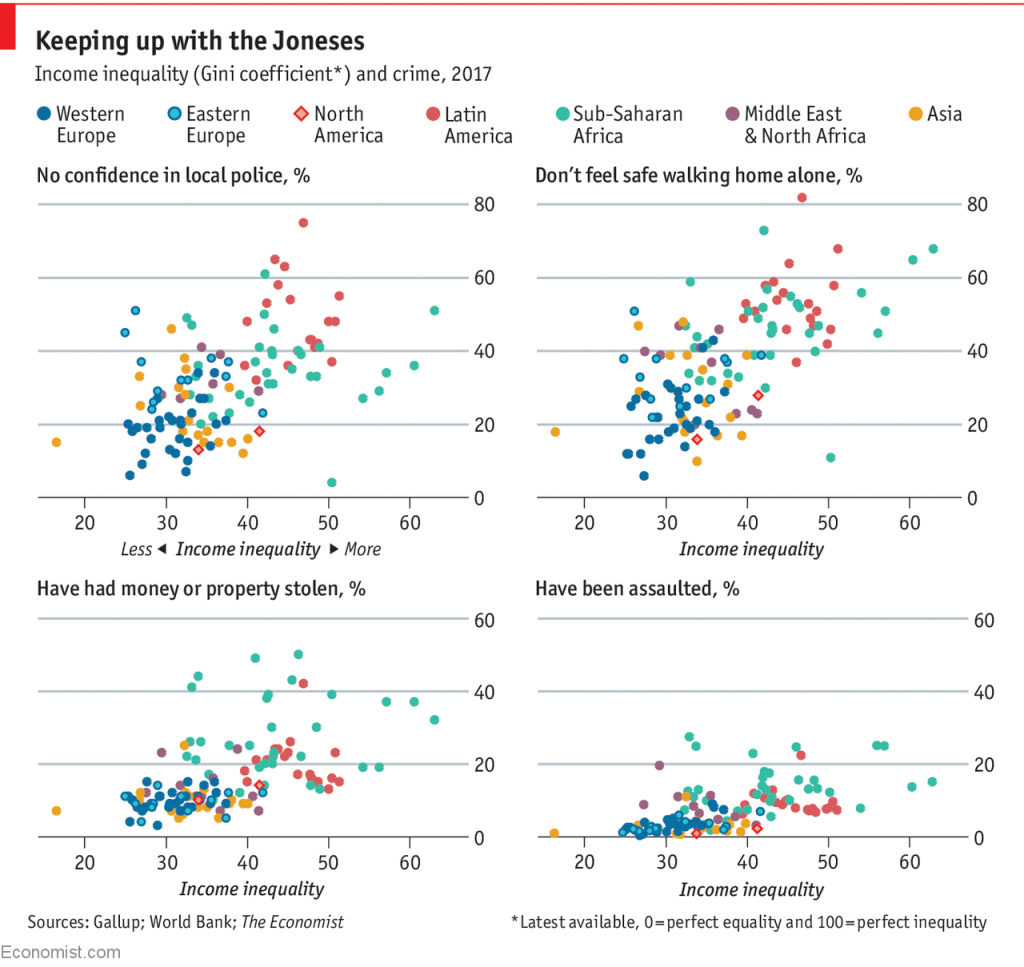
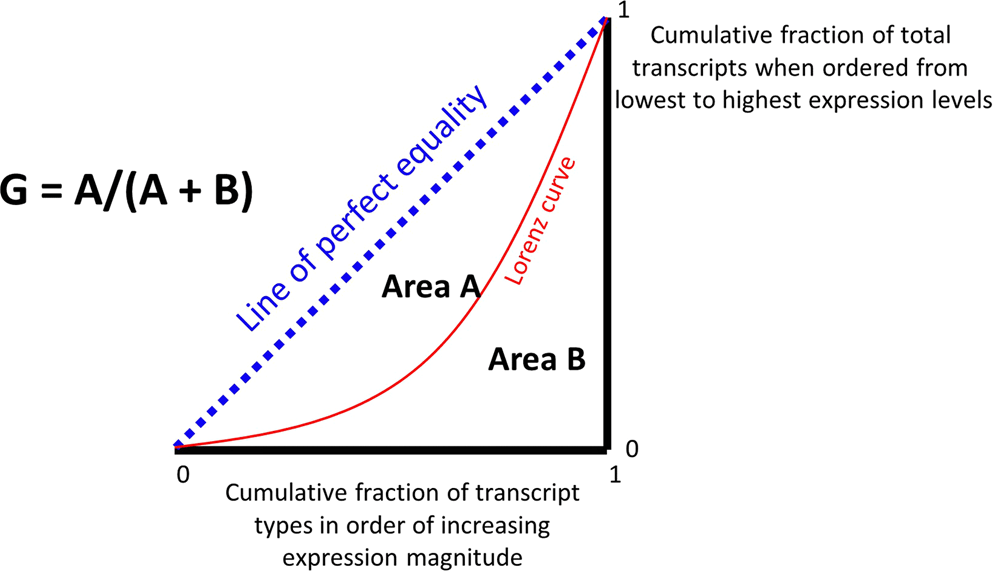
It’s a common misconception though, that the root cause of crime is poverty. This is untrue. If criminal motivation could be distilled to one primary factor, it would in fact be relative poverty. It would be due to the perceived inequity and intrinsic unfairness in a system that one would be driven to crime, and a metric called the Gini Coefficient which is a measure of wealth inequality is significant for this very reason, due to it’s alarming correlation to crime.
This reinforces the idea that people don’t commit crime due to poverty but because of the lack of social mobility. When those who feel dispossessed and left behind by a broken system see a growing elite enrich themselves, we see an increase in social unrest and anger. This is particularly true in recent times where increasing globalisation is beneficial to the elite as it means exporting jobs in return for cheaper goods and services but negatively impacts certain sections of the working class whose livelihoods vanish overnight. The classic maxim regarding free and open trade rings true, “dispersed benefits but concentrated losses.”
- The Cobra Effect and Unintended Consequences
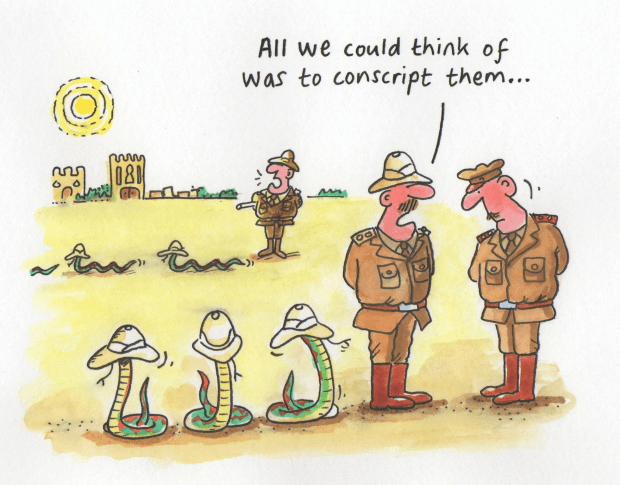
In the 19th century in colonial India, the British government was concerned about the number of venomous cobras in Delhi, and therefore offered a bounty for every dead cobra. Initially this was a successful strategy as large numbers of snakes were killed for the reward, eventually, however, enterprising people began to breed cobras for the income. When the government became aware of this, the reward program was scrapped, causing the cobra breeders to set the worthless snakes free; the wild cobra population further increased. This phenomena is called the cobra effect, to describe the unintended consequences government policy often tends to have.
In the opening scene of season 3 of The Wire, we see the destruction of old affordable housing projects by city officials in Baltimore to make way for supposedly “new and better”, affordable housing, displacing poor working class residents, and continuing the cycle of poverty that is widespread. But politicians continue to run in elections, make promises and only to fail in delivering real change.
Government is often an inhibitor of progress, and season 3 explores the many ways how bureaucracy and a corrupt political system stop change from taking place at the grassroots. An important lesson to remember is that the drivers of social change are very rarely governments, but instead individuals who through hard work find ideally find success in a free market system and give back to their communities.
- Boxing Clubs, Churches and Top Down Systems of Education

Speaking of government mismanagement and grassroots initiatives, in the fourth season of The Wire, we are introduced to the educational system in America, which fails to address it’s many students in poor neighbourhoods and inner cities, who only leave the school system to continue the vicious cycle of poverty and crime they were born into.
The problem isn’t that lower-income students can’t learn, but that what they’re taught in school is not relevant to their life as they see it. Standing on street corners dealing drugs, staying vigilant for drive-by shootings from rival gangs, and dealing with the criminal justice system, doesn’t exactly lend itself to high performance in reading, writing and math.
America, which is famous for its “No Child Left Behind” and Common Core education policies, disempower local communities and schools from making decisions about curriculum and policy, but have to face top-down demands requiring certain standardised test scores and skill proficiencies. Simply put, oftentimes low-income students bound to grow up to live in a life of crime, are expected to achieve academic success in an underfunded school system, which is no real way out from their inevitable future.
On the other hand we see local community initiatives by an ex-convict who starts a boxing gym for example, or that of churches which facilitate drug rehabilitation programs as being bottom-up solutions to problems that cannot be fixed through one-size fits all policies.
- Media, Journalism and Sensationalism

The last season of The Wire is one where we see sensational media coverage at it’s best. Traditionally, journalism is supposed to expose the underbelly of society and shed light on the things that should be in the public eye but are kept hidden. However as is often the case we see that realism, truth and deep, investigative journalism go by the wayside, when great headlines and Pulitzer prizes are at stake.
As relevant today as it was when it first aired, the state of our news is awful and it’s really a race to the bottom. Emotion sells, facts don’t. Maybe it’s as simple as that, but in the last season of The Wire, we’re confronted with the sad truth that journalism today, can be used as a tool to distort truth rather than tell it. Important problems are left ignored, and only those that attract the most eyeballs are printed, which is only logical in a competitive marketplace, but as a by product results in a poor media.
 The Candid Contrarian