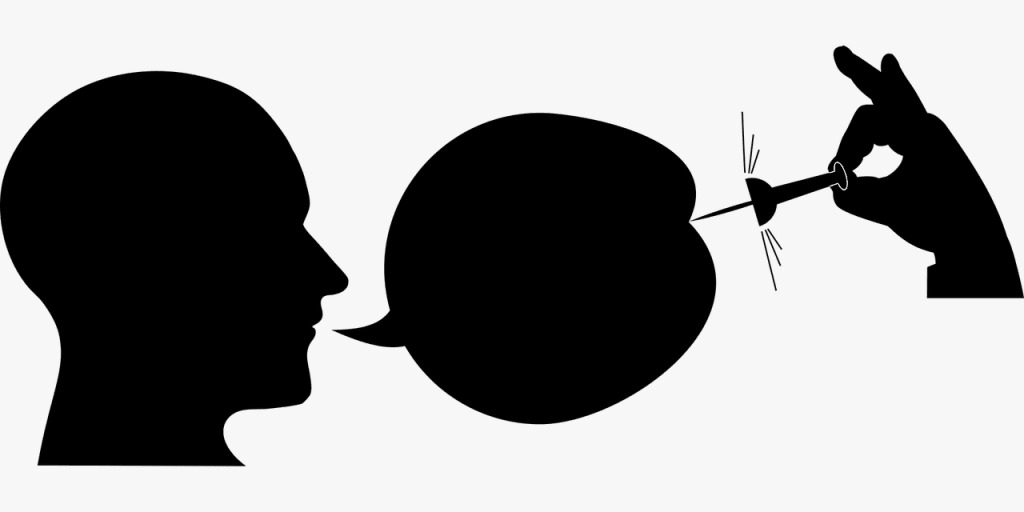
A recently resurfaced video of an Indian stand-up comedian had many people out for blood, both online and offline. In the clip, comic Agrima Joshua joked about the upcoming Chhatrapati Shivaji Maharaj’s statue that is to be made in the Arabian Sea. She described some of the comments she had read online that spoke about how the statue “is an amazing masterstroke by the Prime Minister” and how for the amount it costs it should have a “GPS tracker” and should “shoot laser rays out of its eyes at Pakistani terrorists.” These remarks were quick to incense the public, with politicians weighing in to comment on the derogatory and insulting nature of these jokes to the legacy of Shivaji. What followed were chains of threats and harassment, along with the vandalization of the venue where Joshua had performed. Trolls went online to abuse and threaten the comedian with physical harm, the most significant of which was the response of a man who openly threatened to rape her. His vile words sent a ripple of shock through the community, with many comedians throughout the country invoking their rights and questioning the true cost of free expression.
While criticism and dissent is a part of celebrating art, situations wherein comics are exposed to threats and abuses on the mere basis of their words continue to grow. Hateful comments, death threats, and getting “cancelled.” Why? All due to the intrinsic nature of a comedian’s job. A worldwide debate has been brewing for generations, getting more heated as the years progress. Is the answer to a successful career in comedy avoiding offensive topics and self-censorship? Is political correctness forcing comedians to tiptoe around vital issues while restricting their free expression?
Over the years, “political correctness” has taken on multiple perspectives. The core of being politically correct is to “write, speak, or express oneself in a way that doesn’t disparage any members or groups in society or exclude anyone from a narrative.” While the term originated specifically in the realm of politics, as society has progressed, it has expanded to include systematic failure in all regards. However, this new wave of politically correct (PC) culture has been challenged by many that feel it inhibits free speech and in fact hinders society from dealing with a range of controversial and complex issues effectively.
A black engineer passed up for a promotion wonders whether it has anything to do with race but is reluctant to raise this concern lest it be seen as “playing the race card.” A white manager is afraid of being perceived as racist if she gives her Latino employee critical feedback. These sort of events are a common occurrence in PC culture in traditional work environments, reaffirming that political correctness is a double-edged sword. Not only does this culture pose problems for those in the majority, it also hinders minorities from openly discussing their concerns about fairness and their fears without feeding into negative stereotypes. This further adds to an atmosphere where people are forced to tiptoe around important concerns. And there is no better place to observe the pervasion of PC culture than in the world of entertainment and comedy.
The original purpose of comedy was to shed light on real issues that plague humanity and our societies. It was created as a way to humorously face the less-than-humorous facts of life. But having to be overly politically correct is restricting the ability to face these realities and by consequence, approach them in a humorous way. This is exactly what George Orwell feared in his revolutionary book, 1984. It wasn’t the government surveillance that was responsible for the creation of a dystopia, but rather a censorship of speech. The active restriction of our language is quick to evoke Orwellian nightmares—the inability to efficiently think and communicate and a complete deprivation of our individuality. American stand-up comedians have been quick to warn that the efforts to constantly censor their material will prove to be the demise of the art of comedy, and further, the First Amendment of the United States.
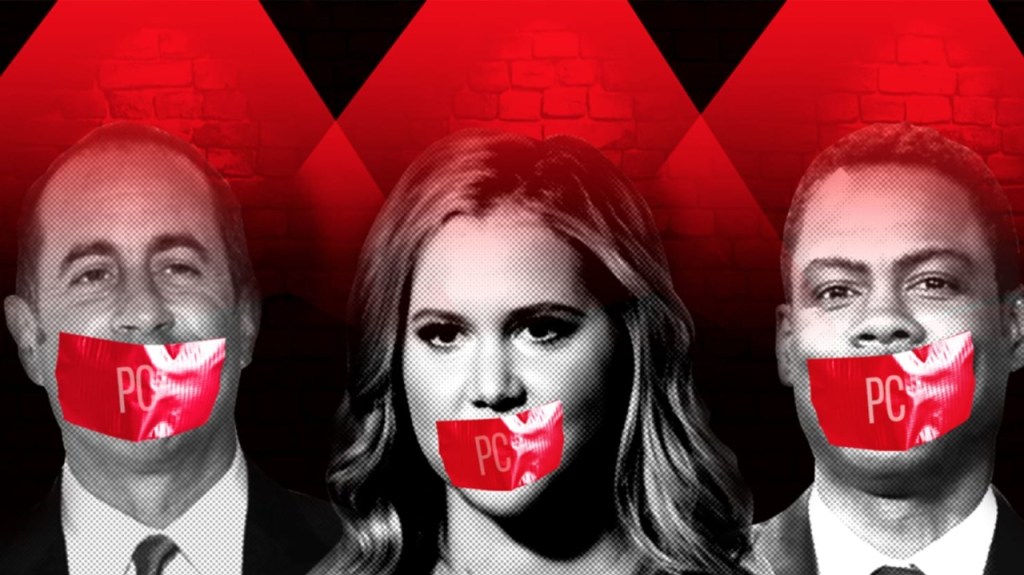
In an interview with talk show host Seth Myers, famous comedian Jerry Sienfeld stated, “there’s a creepy PC thing out there that really bothers me.” He spoke of a joke he made wherein he uttered the phrase “gay French King,” and explained that audience members were outraged merely by his use of the word “gay.” Many commentators pointed out his privileged status as a Caucasian heterosexual male and said that he would not express this belief on PC culture if he were a minority comedian. However, these claims entirely fail to account for the many minority comedians that have pushed back against this political correctness. Viewers are quick to jump to conclusions upon hearing a statement, often using race and gender as their defense. Ironic, isn’t it, considering this is exactly what comedians are accused of doing. Many times, a joke is taken entirely out of its context and painted in a harsh light, portraying the comedian as “politically incorrect.”
After the Golden Globes, host Ricky Gervais was condemned for his controversial, not politically correct jokes. His jokes spanned from ISIS creating the new Netflix, Jeffrey Epstein, and a few vulgar jokes about the movie, “Cats.” After receiving much criticism, he tweeted out, “1. Simply pointing out whether someone is left or right-wing isn’t winning the argument. 2. If a joke is good enough, it can be enjoyed by anyone. 3. It’s not all about you. 4. Just because you’re offended, doesn’t mean you’re right.” Multiple comedians have pointed out that certain jokes have nothing to do with political affiliation or singling out a certain community but are rather meant to bring subjects to light and start a conversation. From the original pioneers of comedy such as Mel Brooks, to new-age comedians such as Chris Rock, there is a firm belief that boundary-pushing humour that forces the audience to confront an issue is under severe threat.
Comedians have always said what could not normally be said by others and have been able to transgress boundaries no one else could. This is vital, for our comedians play an integral role in speaking out about concerns that are too taboo for others to bring up. Rather than taking extreme measures such as boycotting comedy shows, sitcoms, and blacklisting comedians, is it necessary to start a conversation and rather analyze why that particular joke might have caused offense. There is no doubt of the importance of manners and common courtesy as well as knowing the critical distinction between strict definitions and content. Rather than pushing our ideals of political correctness upon others, we must recognize that in the end the freedom lies both with the comedian, to speak of their own volition, and with the audience, to listen, laugh and question.


I’m more than happy to discover this site. I need to to thank you for ones time due to this fantastic read!! I definitely enjoyed every bit of it and i also have you book marked to see new things in your blog.
LikeLiked by 1 person